
Matrugaya Pooja is a sacred Shraddh ritual performed for a departed mother at Bindu Sarovar in Siddhpur, Gujarat. It is traditionally performed by families seeking to offer pind daan and Shraddh rites for their mother at the sacred Matrugaya Kshetra.
This complete guide to Matrugaya Pooja in Siddhpur explains its meaning, religious importance, traditional Vidhi, who can perform the ritual, when it can be performed, what is required, how the ceremony takes place, and practical information for families visiting Siddhpur.
Whether you are planning Matrugaya Pooja for your mother for the first time or looking for detailed information about the rituals at Bindu Sarovar, this guide will help you understand the process and plan your visit.
Matrugaya Pooja in Siddhpur, Gujarat: Complete Guide to Meaning, Vidhi, Importance & Rituals
What Is Matrugaya Pooja?
The word Matrugaya is formed from two Sanskrit words:
Matru — meaning "mother"
Gaya — meaning "place of liberation" (the same root word as Gaya in Bihar, where rites for fathers are performed)
So Matrugaya literally means "the mother's place of liberation."
Unlike general Shraddha rituals — which can honour ancestors collectively — Matrugaya Pooja is performed exclusively for the mother and the maternal lineage. It addresses what Hindu philosophy calls Matru Rina — the spiritual debt every child carries toward their mother.
This debt, according to Sanatan Dharma, cannot be fully repaid through ordinary annual shraddh. It requires a dedicated ritual at a dedicated place. That place is Bindu Sarovar, Siddhpur.
Because of its exclusive purpose and unique geography, Matrugaya Pooja is regarded as a once-in-a-lifetime spiritual responsibility — not an annual ceremony.
The Scriptural Foundation of Matrugaya
Matrugaya is not folk tradition. It is rooted in some of the most authoritative texts of Sanatan Dharma:
📜 Bhagavata Purana (Third Canto)
The Third Canto of the Bhagavata Purana describes in detail the lives of Kardama Rishi, his wife Devahuti, and their son Kapil Muni — all of whom lived on the banks of Bindu Sarovar. This is the primary scriptural foundation for Matrugaya's importance.
📜 Skanda Purana
The Skanda Purana mentions Bindu Sarovar by name and recognises it as a place of unique spiritual potency for rituals dedicated to mothers.
📜 Garuda Purana (Third Skandha)
The Garuda Purana explicitly states that both men and women may offer Shraddha to their mother on the banks of Bindu Sarovar — a right that is unique to Matrugaya Tirtha. In most other shraddh rituals, only men can offer pind to ancestors. Matrugaya is the recognised exception.
📜 Vaman Purana & Nirnaya Sindhu
Both texts reference the spiritual significance of Bindu Sarovar and the rituals performed there.
📜 Rigveda
The Rigveda mentions Siddhpur as Sri-Sthal — meaning "the pious place" or "the sacred place." This is one of the earliest scriptural references to this region.
📜 Mahabharata
The Mahabharata records that the Pandava brothers visited Siddhpur during their exile, recognising it as a sacred site even then.
📜 Manu Smriti
Manu Smriti recommends the performance of Shraddha for ancestors and lists Bindu Sarovar among the holy places where the ritual receives multiplied spiritual benefit.
The Two Sacred Legends of Bindu Sarovar
The sanctity of Bindu Sarovar comes from two profound stories preserved in scripture and living tradition. Both stories are honoured at the site itself — and dedicated temples exist for both legends.
🪷 Legend 1: Lord Parashuram and Mother Renuka
Lord Parashuram, the sixth avatar of Lord Vishnu, came to Bindu Sarovar to perform Pind Daan and Matru Shraddh for his mother, Devi Renuka.
After her passing, Parashuram travelled to this sacred site and performed the full ritual on the banks of Bindu Sarovar. Since that act by a divine incarnation, every Hindu has been guided by tradition to perform their mother's shraddh here at Siddhpur.
Today, there is a dedicated temple to Lord Parashuram at the Bindu Sarovar complex, where he is depicted worshipping the feet of his mother Renuka — an eternal reminder of the duty every child owes to the mother who gave them life.
🪷 Legend 2: Kapil Muni and Mother Devahuti
The other foundational story of Bindu Sarovar centres on Kapil Muni, the founder of Sankhya philosophy and considered an incarnation of Lord Vishnu.
Kapil Muni was the son of Sage Kardama and Devahuti. After his father Kardama left for forest tapasya, his mother Devahuti felt deep grief. Kapil Muni then taught her the philosophy of Sankhya Yoga — the path of spiritual liberation through devotional knowledge — at the banks of Bindu Sarovar.
Through her son's teachings, Devahuti attained moksha (liberation) at this very site. This act — a son guiding his mother to liberation on the banks of Bindu Sarovar — consecrated the lake as the eternal place for maternal moksha.
🪷 The Origin of Bindu Sarovar Itself
Before either legend, there is the birth of Bindu Sarovar itself:
Sage Kardama Muni performed intense penance for ten thousand years on the banks of the Vedic Saraswati River. Pleased by his devotion, Lord Narayana (Vishnu) appeared before him. Moved by Kardama's purity, tears of joy rolled down Lord Vishnu's divine cheeks. From those tears, a sacred lake was formed.
The lake came to be known as Bindu Sarovar — where:
Bindu = drop (of tear)
Sarovar = lake
So Bindu Sarovar is literally "the lake of Lord Vishnu's tears."
3. Scriptural Mandate
Multiple Puranas explicitly state that Matru Shraddh is specifically sanctified at Bindu Sarovar. The Garuda Purana (Third Skandha) is the most direct reference. Performing the same ritual elsewhere is permitted but does not carry the same scriptural recognition.
Among these five, only Bindu Sarovar is specifically designated for maternal rites.
2. Spiritual Distinction from Gaya (Bihar)
Many people confuse Matrugaya with Gaya in Bihar. They are completely different:
Why Matrugaya Pooja Is Performed Only in Siddhpur
This is the most common question families ask: "Why can't I perform Matru Shraddh at Gaya in Bihar, or at home, or at our local temple?"
The answer lies in three reasons — geographic, spiritual, and scriptural:
1. Sacred Geography
Siddhpur sits on the banks of the Vedic Saraswati River. It is recognised as one of the Panch Sarovar — the five most sacred lakes of Sanatan Dharma:
The Sacred Complex at Bindu Sarovar
When you arrive at Bindu Sarovar, you do not see just one temple. You see a sacred complex with multiple temples and tirthas, each with deep significance:
🛕 Temples Around Bindu Sarovar
Shri Matrugaya Bhagwan Temple (also called Gaya Gadadhar) — the main temple of the tirtha
Kapil Muni Temple — honours the sage who taught his mother
Rishi Kardam and Devahuti Temple — at the site of their ashram
Parashuram Temple — depicts Lord Parashuram worshipping his mother Renuka's feet
Saraswati Temple — for the Vedic river goddess
Annapurna Temple — for the goddess of nourishment
Garuda Temple — for Vishnu's divine vehicle
Ancient Shiva Temple — pre-dates much of the complex
Pataleshwara and Kedareshwara Shrines — both forms of Shiva
🌳 The Moksha Peepul Tree
Behind one of the mandapas (pavilions used for tarpana rituals) stands an ancient Peepul tree called Moksha Peepul. Traditionally, visitors offer water to the Pitrus (ancestors) by offering it to this tree — a living symbol of liberation.
💧 The Sacred Bindu Sarovar
Bindu Sarovar is the one and only sacred water for Matrugaya Pooja. It is the heart of the entire tirtha — the lake where Lord Parashuram and Kapil Muni performed rituals for their own mothers, where Vedic shastras specifically prescribe Matru Shraddh, and where every step of your family's Matrugaya Pooja takes place.
Who Can Perform Matrugaya Pooja?
Hindu tradition recognises that the responsibility of Matru Shraddh primarily falls on the eldest son. However, the Garuda Purana and prevailing scriptural authority allow significant flexibility:
✅ The eldest son — traditional primary performer
✅ All sons — together or individually
✅ Daughters — explicitly permitted at Matrugaya per Garuda Purana (this is unique to Bindu Sarovar — in most shraddh rituals women cannot offer pind)
✅ Grandsons (from maternal side) — in absence of sons
✅ Other close relatives — under proper guidance when no immediate family is available
👫 Husband and Wife — Two Valid Ways
If both husband and wife wish to perform Matrugaya Pooja for their respective mothers, there are two equally valid options:
Option 1 — As a couple (together):
Husband and wife perform a single combined pooja together
Both honour their mothers in one unified ritual
Pandit performs the vidhi covering both maternal lineages
Option 2 — Their own separate poojas:
Husband performs Matrugaya for his own mother
Wife performs Matrugaya for her own mother
Two separate rituals — can be done on the same day or different days
Each ritual is complete and dedicated to one mother
Either option is fully accepted in scripture. The choice depends on what feels right for your family. Pandit Daxesh Pandya will guide you in deciding which option suits your circumstances best.
The emphasis in Sanatan tradition is intention (bhavana), respect (shraddha), and dharmic correctness — not rigid eligibility rules.
"Whether you are a son or a daughter, it is our duty to help our mother attain liberation. This puja is repaying the debt of our mother." — As mentioned in Hindu scriptures and confirmed by living tradition at Bindu Sarovar
When to Perform Matrugaya Pooja
This is one of the most misunderstood aspects of Matrugaya. Many websites incorrectly suggest you must wait a specific number of years or perform only during Pitru Paksha.
The truth is simpler and more accommodating:
Matrugaya Pooja is performed AFTER one year of your mother's passing
Hindu tradition requires that one complete year (Varsha Pratham Shraddh) passes after the mother's demise before Matrugaya Pooja is performed. This first year is observed with the regular annual shraddh rituals at home.
Once one year is complete, Matrugaya can be performed at any time thereafter. You can perform it:
Soon after the first-year shraddh completion
A few years later
Even decades later
Hindu tradition says it is never too late to fulfill this sacred duty — but the one-year completion is the prescribed starting point.
Matrugaya Pooja can be performed YEAR-ROUND
While certain days are considered especially auspicious, the ritual is valid and complete on any day:
Why year-round availability matters:
Pitru Paksha is overcrowded — quieter days mean more peaceful, focused rituals
Family schedules, NRI travel, and life commitments rarely align with Pitru Paksha exactly
Many devotees prefer a quiet weekday for a more meaningful personal experience
Scriptural validity does not depend on the date
If your mother's exact death anniversary is unknown, your pandit can guide you to choose an appropriate day based on traditional methods.
The Complete Matrugaya Pooja Vidhi
The full Matrugaya Pooja Vidhi follows a structured Vedic sequence performed under the guidance of an experienced pandit. The complete ritual takes approximately 3 to 4 hours in one continuous session.
The exact sequence of steps, mantras, and offerings follows the authentic tradition preserved across five generations of Pandit Daxesh Pandya's family. For the detailed step-by-step explanation of the vidhi, please refer to the dedicated page:
👉 [Read the complete Matrugaya Pooja Vidhi]
When you book your pooja, Pandit Daxesh Pandya will personally walk you through every step in your preferred language (Marathi, Gujarati, Hindi, or English) — so you arrive prepared and feel at peace throughout the ceremony.
Special Guidance for NRI Families
For Hindu families living abroad — in the US, UK, Canada, Australia, Singapore, Gulf countries, and beyond — performing Matrugaya at Bindu Sarovar is a profound act of dharma that bridges continents and generations.
We provide special support for NRI families:
✅ WhatsApp consultation in English, Hindi, Marathi, or Gujarati
✅ Date planning aligned with your international travel
✅ Accommodation guidance at Siddhpur (hotels, dharamshalas)
✅ Airport pickup arrangement from Ahmedabad (130 km from Siddhpur)
✅ Train station pickup from Mehsana (nearest major station)
✅ Pre-arrival preparation guidance sent via WhatsApp
Many NRI families complete the entire ritual in a 24-48 hour trip — arrive previous day, perform pooja on scheduled day, return next morning.
Frequently Asked Questions
Q1: When can Matrugaya Pooja be performed after my mother's passing?
Matrugaya Pooja is performed after one complete year of your mother's demise. Hindu tradition requires that the first-year shraddh rituals are observed at home before Matrugaya can be performed at Siddhpur. Once one year is complete, Matrugaya can be performed at any time thereafter — a few years later, or even decades later. Hindu tradition says "it is never too late" to fulfill this duty, as long as the one-year minimum is observed.
Q2: Can daughters perform Matrugaya Pooja?
Yes, with full scriptural authority. The Garuda Purana (Third Skandha) explicitly states that both men and women may offer Shraddha to their mother at Bindu Sarovar. This is unique to Matrugaya — at most other shraddh sites, women cannot offer pind. Many daughters today perform the ritual either alongside brothers or independently.
Q3: What if I don't know my mother's gotra or my maternal ancestors' names?
This is common, especially for NRI families and younger generations. Your pandit can guide you through the traditional method of invoking unknown ancestors. Knowing your mother's name and approximate date of birth is usually sufficient.
Q4: How long does the complete ritual take?
The full Matrugaya Pooja Vidhi takes approximately 3 to 4 hours, performed in one continuous session. This includes preparation, the actual ritual, Brahmin Bhojan, and concluding ceremonies.
Q5: Do I need to fast on the pooja day?
Yes — fasting on the day of Matrugaya Pooja is required. This is an important part of the ritual's purity. On the pooja day, you should not consume any food or heavy drinks before the ritual is completed. Only water is permitted. The fast is broken after the Brahmin Bhojan portion of the ceremony is concluded, when you take prasad.
Additionally, for at least 24 hours before the pooja, families should follow a strict satvik diet — vegetarian only, no onion, no garlic, no non-vegetarian food, and no alcohol. A light vegetarian dinner the previous evening is recommended.
Q6: Can the ritual be performed online or remotely?
No — Matrugaya Pooja requires physical presence at Bindu Sarovar. This is non-negotiable by scriptural authority. The site itself is sanctified for this specific purpose. If physical travel is impossible, partial arrangements may be made in exceptional circumstances — please WhatsApp us to discuss.
Q7: What is the difference between Matrugaya, Pind Daan, and Tarpan?
Pind Daan is one step within the larger ritual (offering symbolic rice balls)
Tarpan is another step (water offerings to ancestors)
Matrugaya is the complete ritual at Bindu Sarovar that includes Pind Daan, Tarpan, Brahmin Bhojan, and other steps — performed specifically for the mother
Q8: How does Matrugaya differ from Pitru Paksha shraddh?
Pitru Paksha is a 15-day period (Bhadrapad Krishna Paksha) when general ancestral rites are recommended. Matrugaya is a specific ritual at a specific place for the mother. You can perform Matrugaya during Pitru Paksha (it's especially auspicious then) or at any other time of the year.
Q9: Is it true that performing Matrugaya can help with Pitru Dosh?
Many families perform Matrugaya as part of addressing Pitru Dosh — perceived ancestral karmic obstacles affecting marriage, career, health, or progeny. While effects vary by individual karma, Matrugaya is recognised in scripture and tradition as one of the most powerful ways to address maternal-lineage related Pitru Dosh.
Q10: Should children attend?
Children above age 5 are welcome and often included as part of family participation. The ritual is solemn but not frightening — children typically sit quietly with the family. For younger children, it's better to arrange childcare nearby.
How to Book
Every family here trusted us with their mother's most sacred duty. When you're ready to begin your family's Matrugaya journey — one WhatsApp message starts everything.
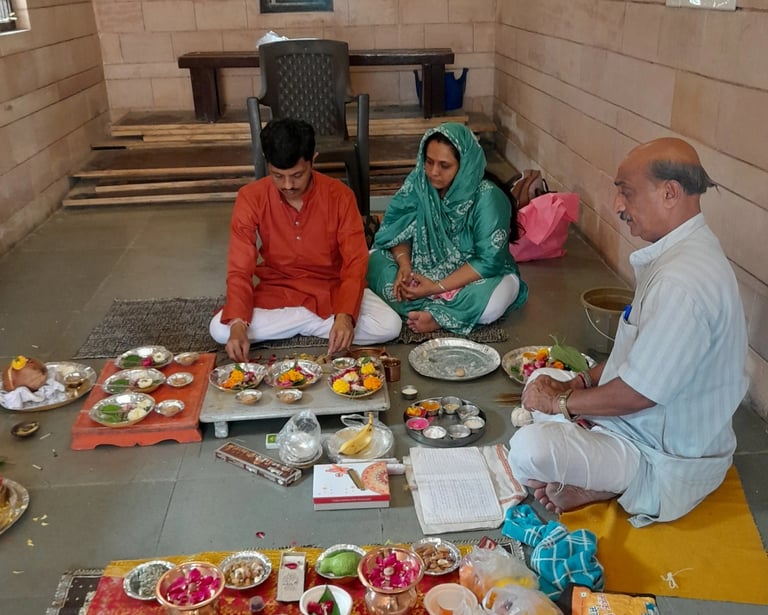
Real Matrugaya Rituals — Real Families
Real rituals. Real families. Pandit Daxesh Pandya performing Matrugaya Pooja with complete Vedic vidhi at Bindu Sarovar, Siddhpur.
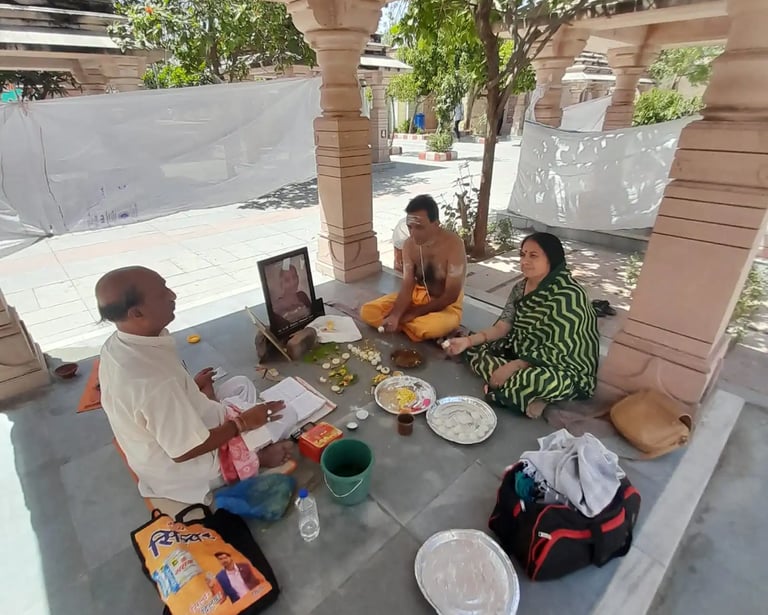
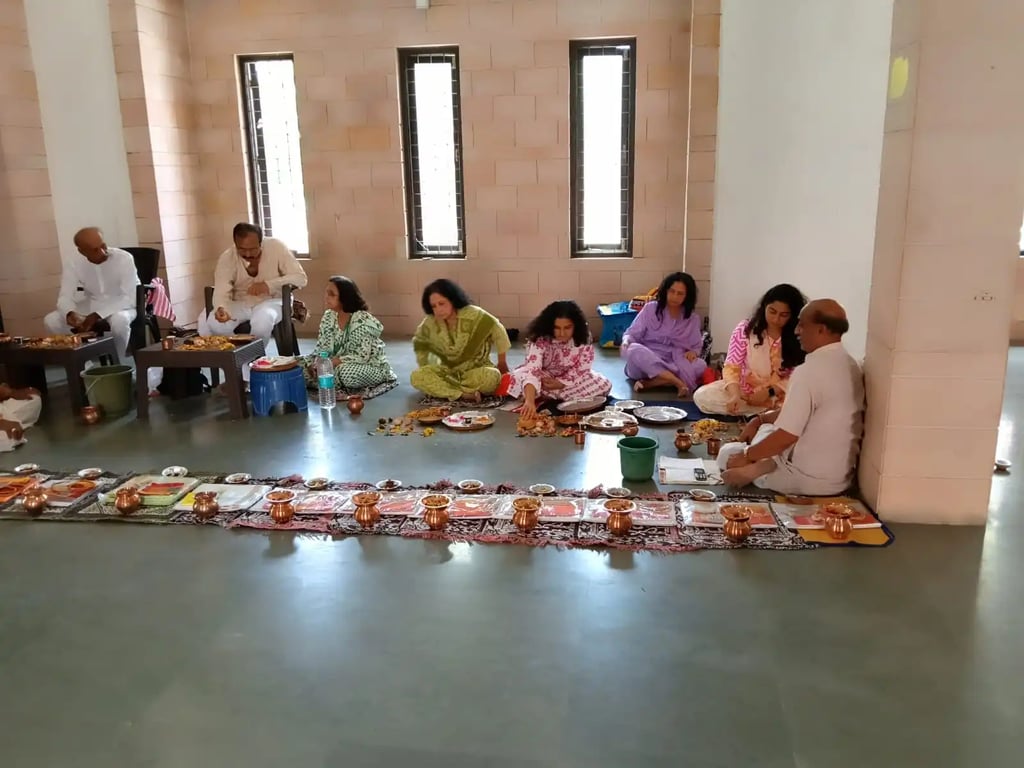
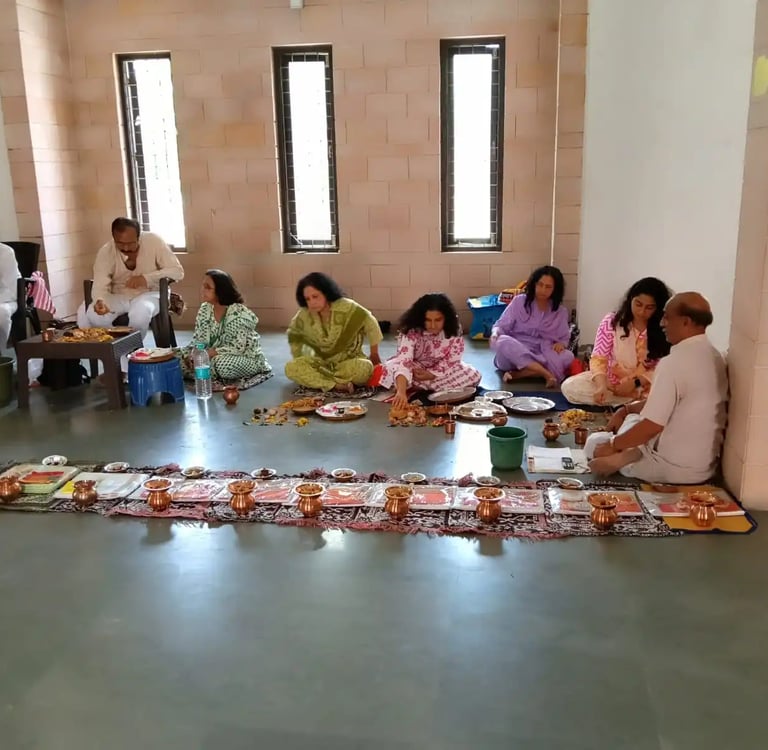
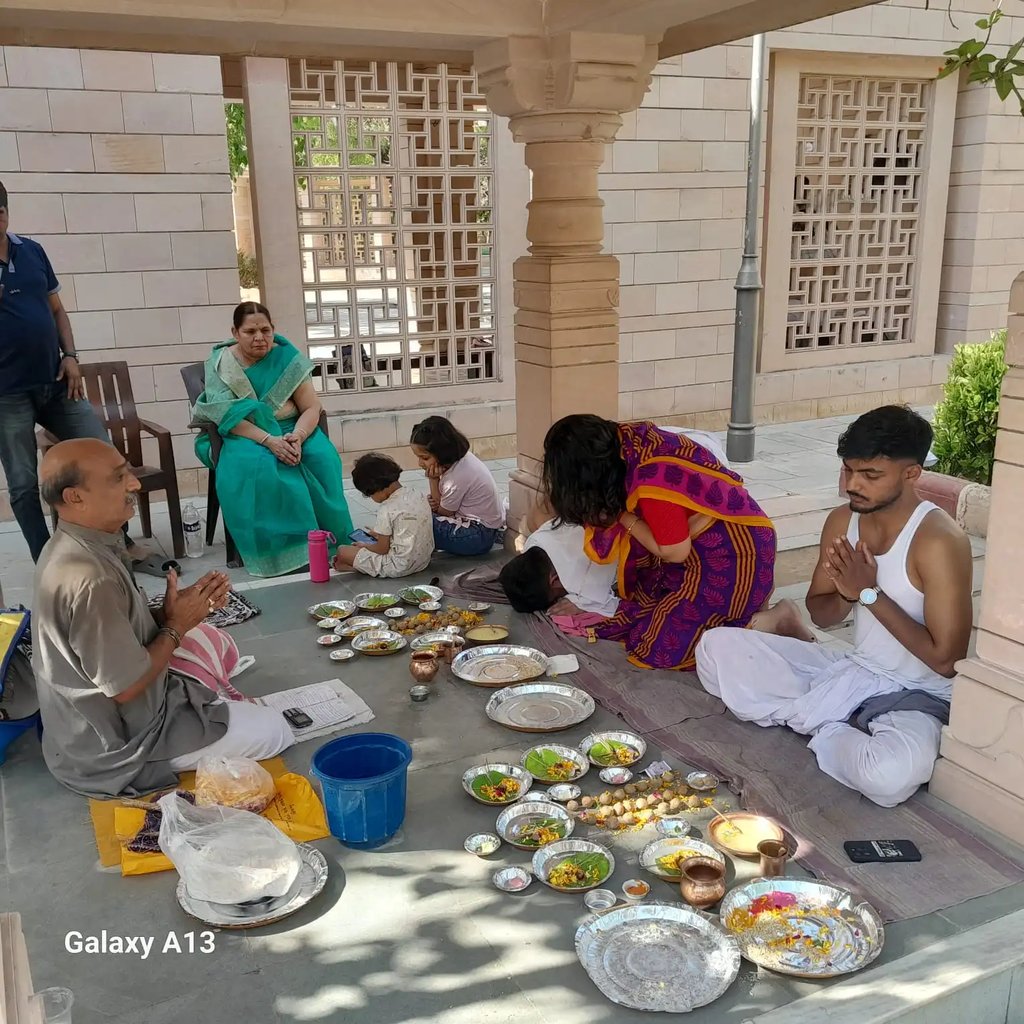
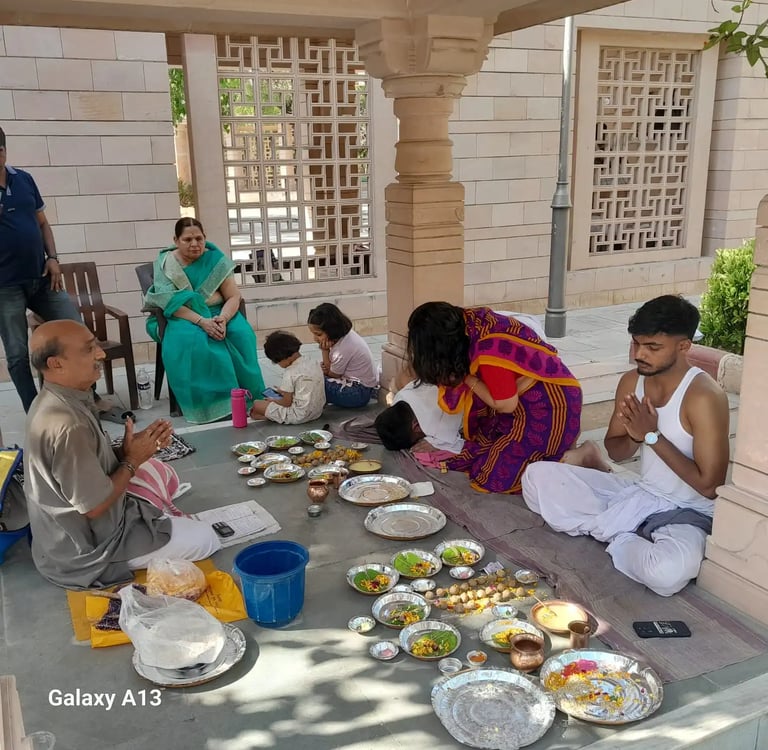
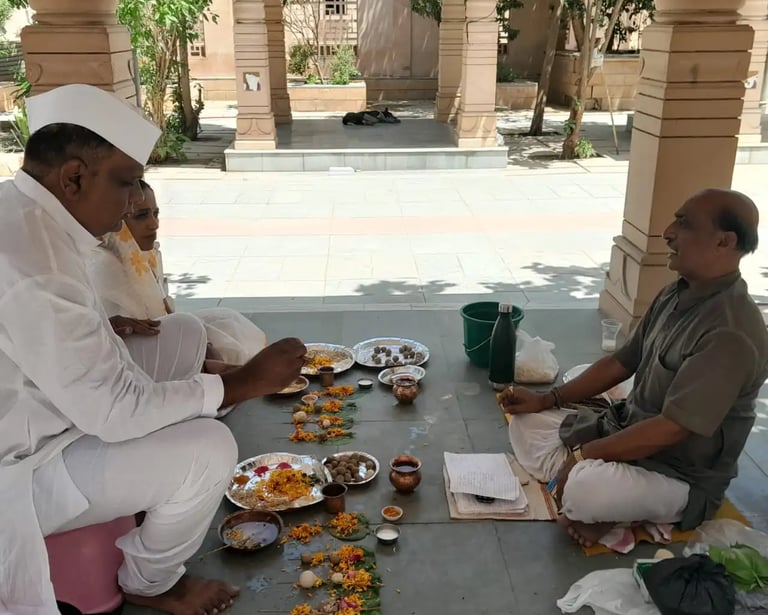
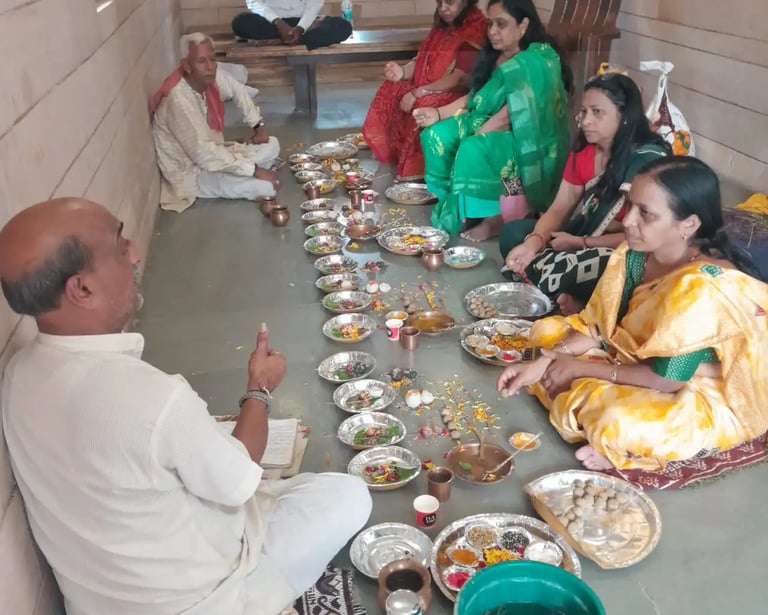
Every family here trusted us with their mother's most sacred duty. When you're ready to begin your family's Matrugaya journey — one WhatsApp message starts everything.
© 2026 MatrugayaShraddhPooja.in | All Rights Reserved